

[ARTICLE] Mastering English Communication Through Leveraging Social Media
Mastering English Communication Through Leveraging Social Media
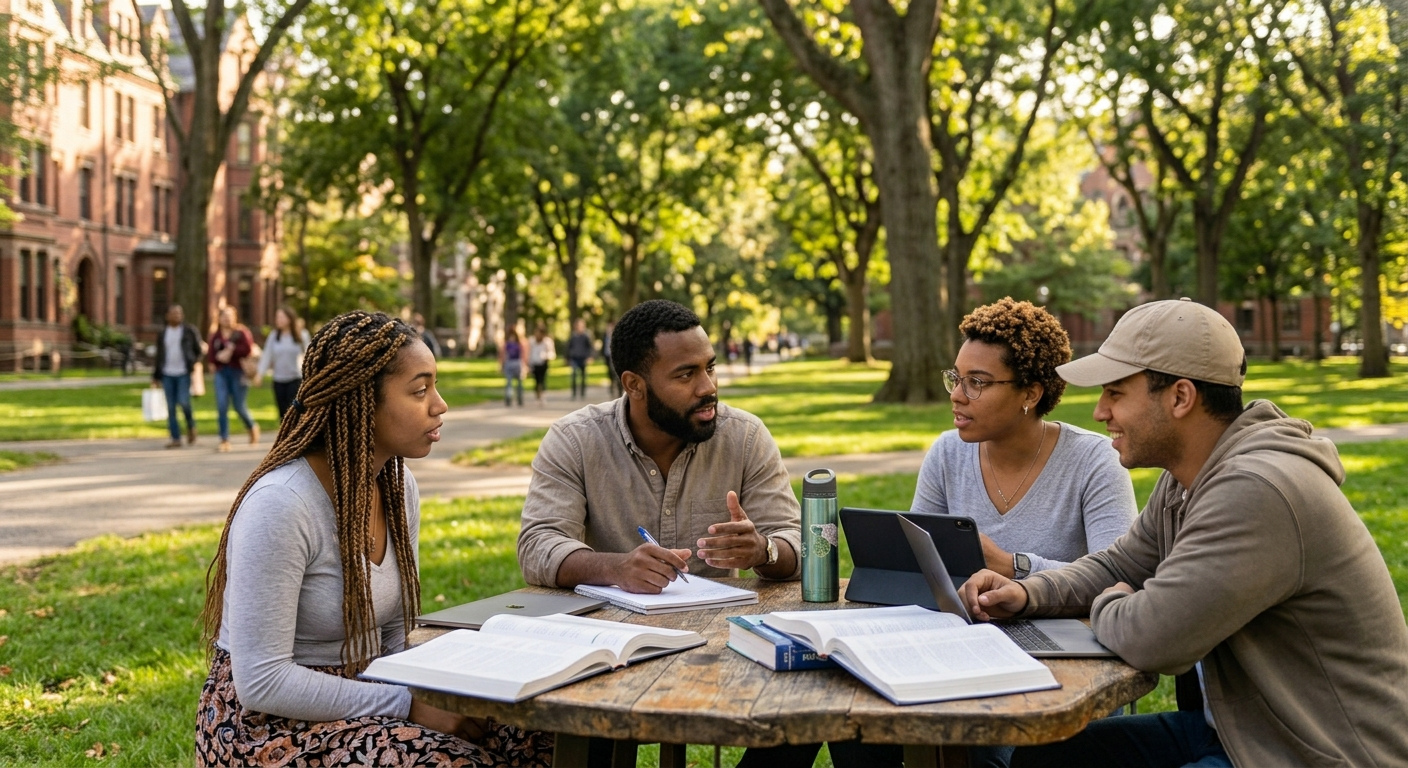
In our globally connected world, learning to communicate effectively in English has transcended traditional textbook dialogues and grammar drills. Digital spaces, particularly social media platforms and online collaborative hubs, have emerged as vibrant environments for practical language acquisition. By shifting from artificial exercises to real-world interactions, modern learners are discovering how to build authentic conversational skills while navigating the nuances of global communication.
One of the greatest advantages of digital platforms is their ability to connect learners with real audiences across the globe. Engaging with real-world digital communities allows learners to practice language as a dynamic tool for expression rather than a set of abstract rules.
When learners write posts, engage in discussions, or contribute to collaborative public spaces like digital forums, their goal shifts toward expressing ideas clearly and meaningfully. As research by Rangsarittikun and Watson Todd (2022) highlights, adopting a “languaging curriculum” in practice—where learners use target language structures for real-world communication on social media—enables them to communicate successfully by connecting with authentic audiences. This real-time feedback loop instills confidence, encourages creative language use, and bridges the gap between classroom theory and everyday digital interaction.
Communicating online also exposes learners to diverse cultural backgrounds and varied English dialects. In international digital spaces, success depends not just on grammatical correctness, but on pragmatic competence—the ability to choose appropriate tone, style, and phrasing based on context and social dynamic.
Because English functions as a global lingua franca (ELF), digital learners must adapt to fluid conversational environments. Tsantila and Sifakis (2026) emphasize the importance of reconconceptualizing pragmatic competence through an ELF-aware framework, showing that modern ELT approaches must prepare learners to analyze and adapt materials for diverse international contexts. Social media platforms serve as an ideal environment for this development, offering exposure to various communication styles, online etiquette, and intercultural norms that textbooks often overlook.
By combining real-world social media engagement with a heightened awareness of global communication norms, learners can achieve true communicative fluency. Embracing interactive digital spaces transforms language learning from a passive study routine into an active, empowering lifestyle.
References
Rangsarittikun, R., & Watson Todd, R. (2022). The languaging curriculum in practice: Communicating successfully on social media. RELC Journal. Advance online publication. https://doi.org/10.1177/00336882221087468
Tsantila, N., & Sifakis, N. (2026). Reconceptualizing pragmatic competence in ELT: An ELF-aware framework for materials analysis and adaptation. RELC Journal. Advance online publication. https://doi.org/10.1177/00336882261476450
Comments :